
Say 'No' to a
Politicians Republic
Australians for Constitutional Monarchy
in the media
Australians for Constitutional Monarchy in the Media
“Let us declare that our head of state should be one of us”, opposition leader Bill Shorten said.
”But Governor-General Quentin Bryce was often sent overseas as the Australian head of state by the very government in which he was a minister,” ACM’s David Flint reminded the media.
Help ACM preserve our flag and our Crowned Republic with a donation today
Youth Outreach
Young Australian's today have little interest in changing our constitution
History of ACM
Discover more about our history and key people in the founding of ACM
our history
History of Australians for Constitutional Monarchy
Australians for Constitutional Monarchy (ACM) was launched in June 1992 to preserve protect and defend the Australian Constitution, the role of the Crown in it, and our National Flag
ACM became the largest grassroots community organisation in Australia. It was ACM that organised the highly successful ‘No Republic’ campaign for delegates to attend the Constitutional Convention.
Preserve Our Flag
Our Australian Flag is Under Attack
Our beloved Australian Flag remains under attack by a small minority of republican flag changers. Without a mandate, and notwithstanding their landslide defeat in 1999, the republicans are in the process of removing all symbols of the Australian Crown – an institution they see as a constraint on republican politicians. The republican newspaper The Age says that since everyone knows the Flag will change after some unknown (politicians’) republic is adopted, the Australian Flag should be changed now.
Get the Latest News
Join our mailing list to receive periodic updates
testimonials
What they say about our system of government
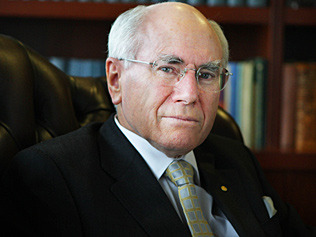
The hon JOhn howard OM AC
Prime Minister 1996-2007
The constitutional monarchy has “contributed great stability” to Australia’s system of government even though its role has changed over the years.
The Hon Tony Abbott
Prime Minister 2013-2015
I want to keep the system that we have, which I'm sure will continue to evolve under the Crown.
Contact Information
Postal Address: GPO Box 9841, Sydney, NSW, 2000
Email: [email protected]
Phone: 1800 OUR CROWN (1800 687 276)